


✨ Smart Article Summary
- The Digital Personal Data Protection (DPDP) Act, 2023, is India’s landmark legislation to safeguard individuals’ personal data.
- It empowers users with rights over their information, mandates consent-based data collection, and holds organizations accountable for breaches.
- Applicable to all sectors, including financial services, the Act aims to build trust in the digital ecosystem while balancing innovation and privacy.
- Valid Notice and Consent: Financial institutions must provide clear, concise, and multilingual notices about data collection, usage, and sharing practices.
- Consent must be obtained through an affirmative action (e.g., ticking a box) and can be withdrawn anytime.
The Digital Personal Data Protection (DPDP) Act, 2023, is India’s landmark legislation to safeguard individuals’ personal data. It empowers users with rights over their information, mandates consent-based data collection, and holds organizations accountable for breaches. Applicable to all sectors, including financial services, the Act aims to build trust in the digital ecosystem while balancing innovation and privacy.
Check out the Top 15 rules from the act.
- Valid Notice and Consent: Financial institutions must provide clear, concise, and multilingual notices about data collection, usage, and sharing practices. Consent must be obtained through an affirmative action (e.g., ticking a box) and can be withdrawn anytime. Example: Banks must explain why they need your phone number or location data.
- Purpose-Limited Data Collection: Collect only the data strictly necessary for the service (e.g., KYC, transaction processing). Avoid collecting excessive data “just in case.” Example: A loan app shouldn’t ask for contact list access if it’s not needed for credit scoring.
- Data Security Safeguards: Implement technical and organizational measures like encryption, access controls, and regular audits to prevent breaches. Example: Use multi-factor authentication for online banking logins.
- Breach Notification: Report data breaches to the Data Protection Board and affected customers within 72 hours of discovery. Notify users in a language they understand. Example: Inform customers via SMS/email if their account details are compromised.
- Customer Rights: Allow users to access, correct, erase, or port their data. Provide simple mechanisms to exercise these rights. Example: Allow users to download their transaction history or update their address online.
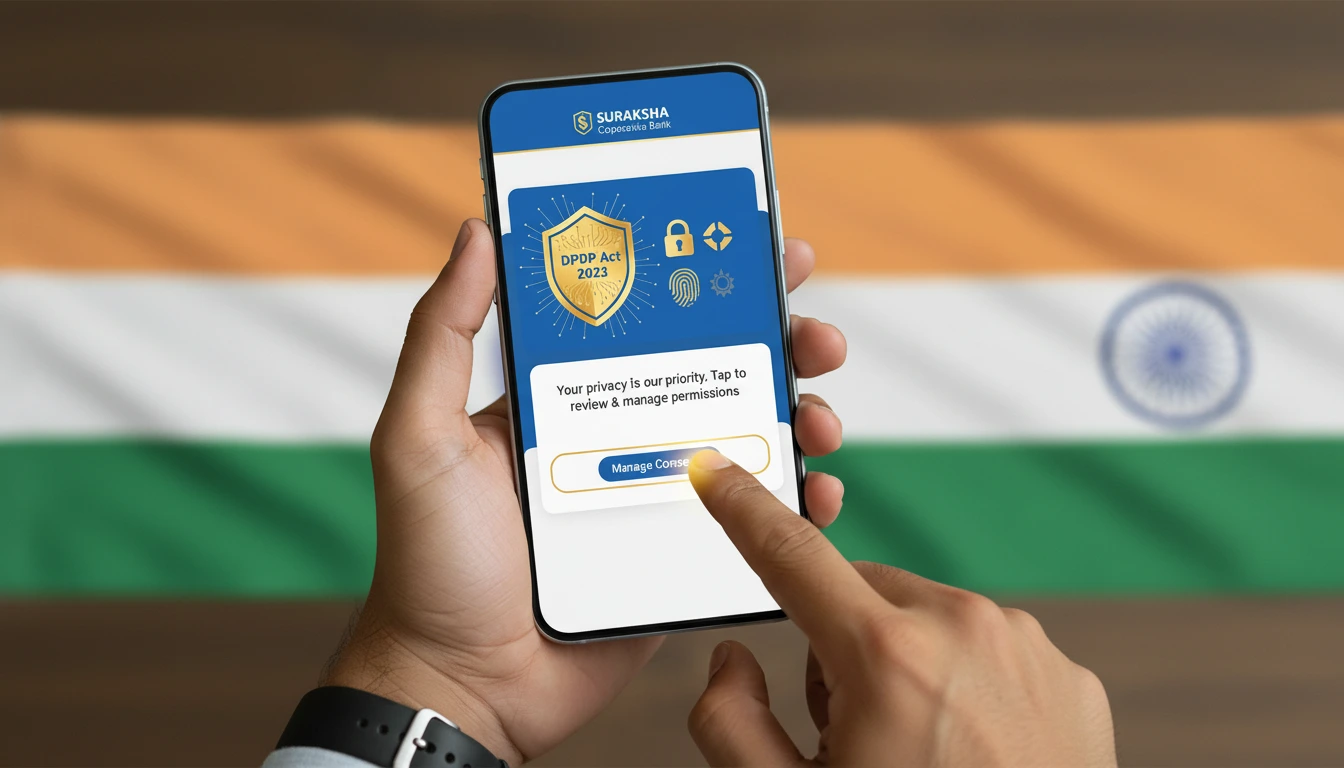
- Consent Management: Offer an easy-to-use platform to manage, modify, or revoke consent. Consent should be granular (e.g., separate for marketing vs. transactions). Example: A “Manage Preferences” option in the app to opt out of promotional emails.
- Data Retention: Retain data only as long as needed (e.g., for legal compliance or dispute resolution), then securely delete it. Example: Delete inactive account data after 5 years unless legally required to keep it.
- Cross-Border Data Transfers: Transfer data only to countries with adequate data protection laws (as approved by the Indian government) or with contractual safeguards. Example: A bank in India can share data with a EU-based payment gateway if it complies with GDPR.
- Significant Data Fiduciaries (SDF): Large institutions (e.g., big banks, fintechs) must appoint a Data Protection Officer, conduct impact assessments, and ensure algorithmic transparency. Example: A major bank appoints a DPO to oversee compliance and audit data practices.
- Penalties for Non-Compliance: Fines up to ₹250 crore for breaches, including failure to secure data or notify breaches. Example: A bank faces a ₹50 crore penalty for a preventable data leak.
- Data Accuracy: Ensure data is accurate, complete, and up-to-date to prevent errors (e.g., wrong credit scores). Example: Update a customer’s address promptly if they notify the bank.
- Grievance Redressal: Establish a process to resolve complaints within 7 days. Appoint a contact officer for data-related issues. Example: A customer can escalate a data misuse complaint via a dedicated email or app feature.
- Children’s Data: Obtain verifiable parental consent for users under 18; avoid targeted advertising to minors. Example: A financial app asks for age verification and parental approval for users under 18.
- Data Minimization: Collect only relevant, necessary data (e.g., no need for a selfie if ID proof suffices). Example: A loan app shouldn’t ask for location access if not required for approval.
- Transparency: Provide clear, accessible privacy notices in local languages (e.g., Hindi, Tamil) and explain data usage in simple terms. Example: A bank’s website explains data usage in multiple languages.
These rules aim to strengthen data privacy, build trust, and ensure accountability in India’s financial sector. Would you like examples specific to a type of financial service?