


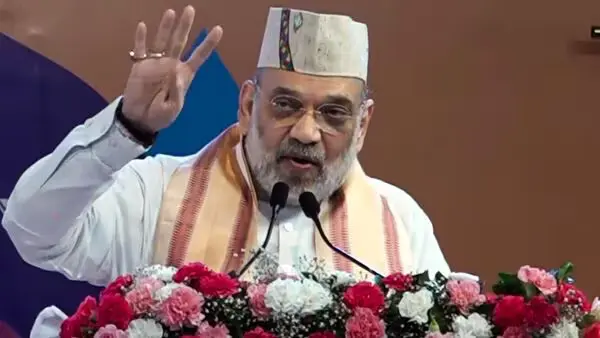
- India’s cooperative sector is on the brink of a significant transformation as Union Home Minister and Minister of Cooperation Amit Shah is set to unveil the National Cooperative Policy 2025 on Thursday, July 24.
- This new policy will take effect this year and will guide the sector for the next two decades.
- It will replace the 2002 policy, which laid the groundwork for better management of cooperative institutions’ economic activities.
- The new policy focuses on revitalizing and modernizing the cooperative sector, with the goal of fostering prosperity through collaboration by creating a practical roadmap at the grassroots level.
- The National Cooperative Policy 2025 aims to make cooperative organizations accessible to everyone, ensuring they operate efficiently and professionally, are prepared for future challenges, and can create ample job opportunities and income-generating options, especially in rural communities.
India’s cooperative sector is on the brink of a significant transformation as Union Home Minister and Minister of Cooperation Amit Shah is set to unveil the National Cooperative Policy 2025 on Thursday, July 24. This new policy will take effect this year and will guide the sector for the next two decades.
It will replace the 2002 policy, which laid the groundwork for better management of cooperative institutions’ economic activities.
The new policy focuses on revitalizing and modernizing the cooperative sector, with the goal of fostering prosperity through collaboration by creating a practical roadmap at the grassroots level.
The National Cooperative Policy 2025 aims to make cooperative organizations accessible to everyone, ensuring they operate efficiently and professionally, are prepared for future challenges, and can create ample job opportunities and income-generating options, especially in rural communities.
Why is the Centre replacing the National Cooperative Policy 2002?
The Ministry of Cooperation is convinced that over the past two decades, our society, country, and even the world have undergone significant transformations thanks to globalization and technological advancements. With this in mind, they stated, “it became necessary to formulate a new policy so that cooperative institutions can be made more active and useful in the current economic scenario and the role of the cooperative sector can be strengthened in achieving the goal of ‘Viksit Bharat 2047
Shah highlighted three main reasons for the decline of the cooperative movement in India: outdated laws that haven’t changed, a lack of growth and innovation in cooperative activities, and recruitment practices that are often swayed by favoritism. “The Modi government has now amended these laws and introduced the concept of Tribhuvan Sahkari University (TSU) to tackle these challenges,” he emphasized.
What to expect from the National Cooperative Policy 2025
- This initiative aims to support employment and positively impact 1.4 billion people.
- Shah talked about creating cooperatives in every village across India within the next five years, with an ambitious target of setting up 200,000 Primary Agricultural Credit Societies (PACS) by February 2026. This was shared during a meeting of state cooperation ministers, coinciding with the celebration of the International Year of Cooperatives (IYC) in 2025.
- The meeting also reviewed the initiatives from the Ministry of Cooperation, where discussions included boosting dairy and fisheries cooperatives, as well as implementing the world’s largest grain storage scheme within the cooperative sector.
Shah has made it clear that every state needs to establish its own cooperative policies by January 31, 2026. “We’ve now brought cooperative banks under the Banking Act, and the Reserve Bank of India has adopted a more flexible approach, helping us tackle many of our challenges,” the minister stated.
He emphasized that no village in the country should be without a cooperative, and he urged the use of the National Cooperative Database to achieve this aim.
A national-level committee, consisting of 48 members and led by former Union Minister Suresh Prabhakar Prabhu, was responsible for drafting the new National Cooperative Policy. This committee included representatives from national and state cooperative federations, various cooperative societies, officials from relevant central and state government ministries, and academic experts.
To ensure an inclusive and participatory approach, the committee held 17 meetings and organized four regional workshops in Ahmedabad, Bengaluru, Gurugram, and Patna. They carefully reviewed and incorporated a total of 648 suggestions from stakeholders into the new cooperative policy.