


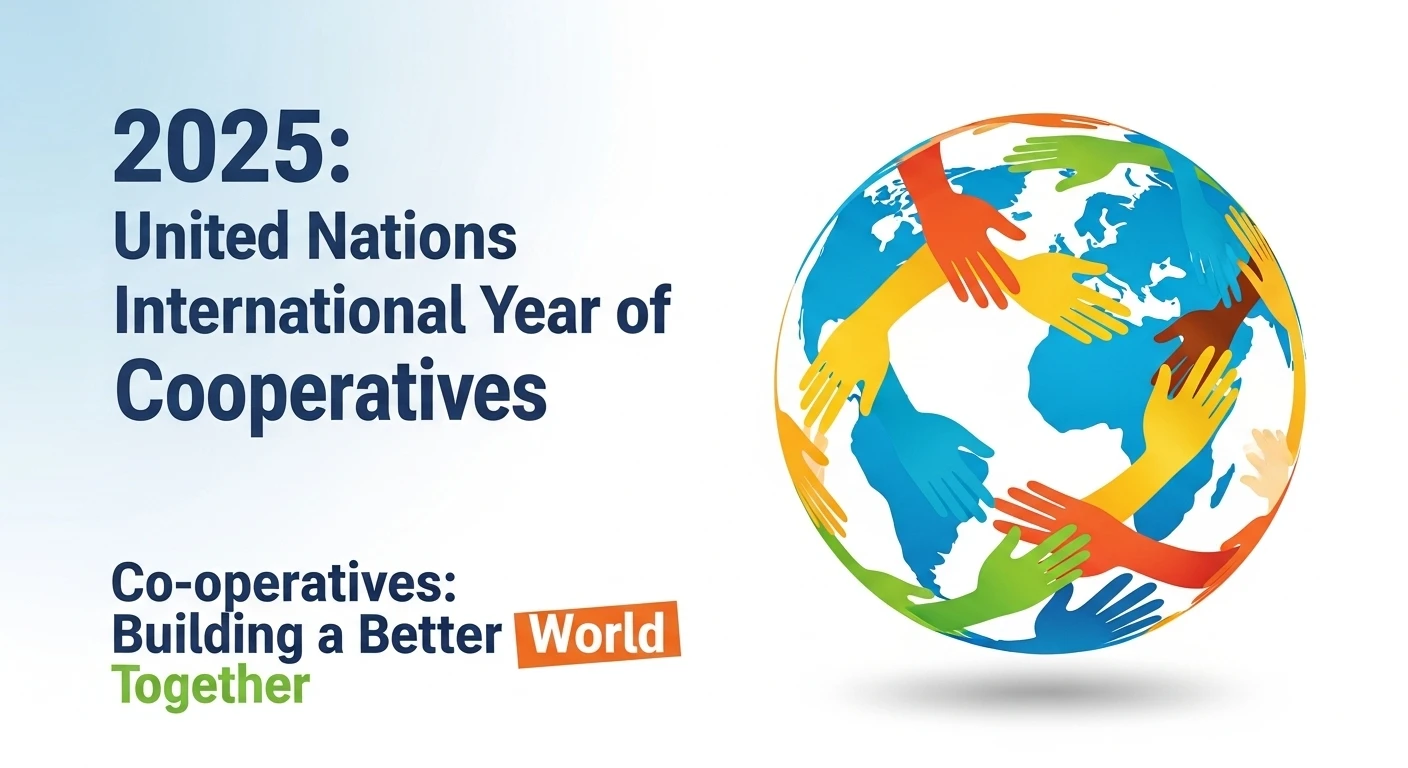
- International years are designated by the United Nations to shine a light on important issues and inspire action.
- The International Year of Cooperatives aims to boost public awareness about the vital role cooperative enterprises play in reducing poverty, creating jobs, and fostering social integration.
- This year will also showcase the strengths of the cooperative business model as a viable alternative for driving socioeconomic development.
- New York, 20 June 2024 – The UN General Assembly announced yesterday that 2025 will be recognized as the International Year of Cooperatives (IYC2025), celebrated under the theme “Cooperatives Build a Better World.” This theme emphasizes the enduring global influence of cooperatives and highlights their essential role in tackling various worldwide challenges.
- It also points out how cooperatives significantly contribute to achieving the Sustainable Development Goals (SDGs) by 2030.
International years are designated by the United Nations to shine a light on important issues and inspire action. The International Year of Cooperatives aims to boost public awareness about the vital role cooperative enterprises play in reducing poverty, creating jobs, and fostering social integration. This year will also showcase the strengths of the cooperative business model as a viable alternative for driving socioeconomic development.
New York, 20 June 2024 – The UN General Assembly announced yesterday that 2025 will be recognized as the International Year of Cooperatives (IYC2025), celebrated under the theme “Cooperatives Build a Better World.”
This theme emphasizes the enduring global influence of cooperatives and highlights their essential role in tackling various worldwide challenges. It also points out how cooperatives significantly contribute to achieving the Sustainable Development Goals (SDGs) by 2030.
In its resolution A/78/L.71, the UN General Assembly suggests ways to celebrate this year and encourages all UN Member States, the United Nations System, and relevant stakeholders to use this occasion to promote the contributions of cooperatives to social and economic development. Among other recommendations, the UN General Assembly invites Member States to think about forming national committees to coordinate and prepare for all IYC2025 activities.
“The timing of the General Assembly’s decision couldn’t be better. The innovative contributions of cooperatives toward sustainable development will be key in speeding up our progress toward the Sustainable Development Goals as we near 2030,” stated Li Junhua, Under-Secretary-General of the United Nations Department of Economic and Social Affairs. “The second International Year of Cooperatives will serve as a chance to rally all stakeholders to support and expand cooperatives everywhere, enhancing their contributions for a better world.”
National mechanisms play a crucial role in effectively coordinating activities and initiatives to celebrate any International Year. They are key to ensuring that the messages for the Year resonate at the international level and reach stakeholders at both national and local levels.
In 2012, the United Nations General Assembly proclaimed it the International Year of Cooperatives, shining a light on how cooperatives contribute to socio-economic development, especially in areas like poverty reduction, job creation, and social integration.
With the theme “Cooperative Enterprises Build a Better World,” this Year aims to inspire the growth and establishment of cooperatives globally. It also encourages individuals, communities, and governments to recognize the vital role cooperatives play in achieving internationally agreed development goals, including the Millennium Development Goals.
The United Nations General Assembly Resolution A/RES/64/136 urges all member states, the UN, and relevant stakeholders to seize the opportunity presented by the International Year of Cooperatives to promote these organizations, raise awareness of their contributions to social and economic development, and support the formation and growth of cooperatives.