

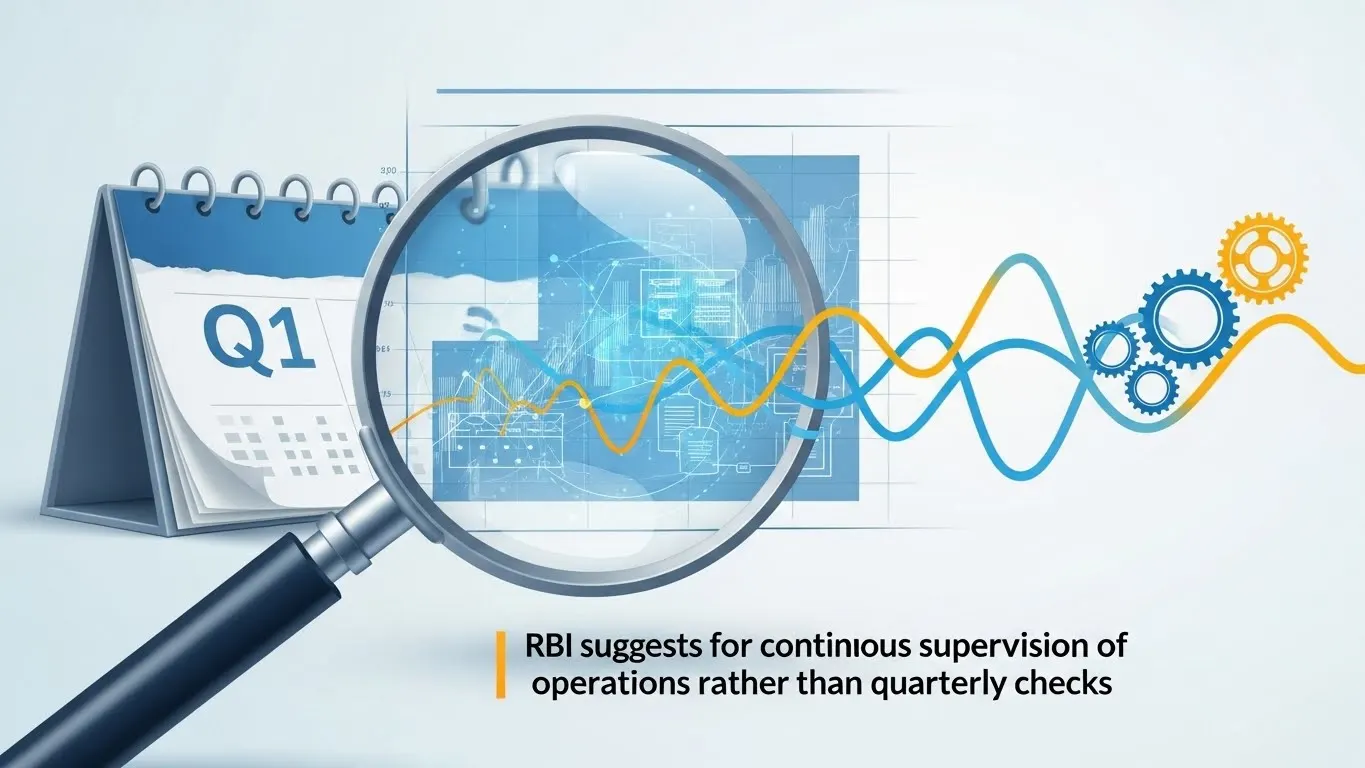
- RBI Deputy Governor Swaminathan J has urged banks to make a significant shift from periodic compliance checks to a more continuous approach to supervision in our increasingly digital world.
- During his speech at the Third Annual Global Conference of the College of Supervisors, he stressed that simply analyzing balance sheets isn’t enough anymore; the stability of banks now hinges on their operational resilience, data integrity, and reliance on third-party services.
- Shift from Traditional Supervision Methods He pointed out that traditional methods of supervision are falling short in today’s fast-paced environment.
- For years, supervisors have been trained to scrutinize balance sheets and follow standard procedures.
- However, Swaminathan noted that a bank might look perfectly sound on paper while still being at risk of major disruptions from a single event.
RBI Deputy Governor Swaminathan J has urged banks to make a significant shift from periodic compliance checks to a more continuous approach to supervision in our increasingly digital world. During his speech at the Third Annual Global Conference of the College of Supervisors, he stressed that simply analyzing balance sheets isn’t enough anymore; the stability of banks now hinges on their operational resilience, data integrity, and reliance on third-party services.
Shift from Traditional Supervision Methods
He pointed out that traditional methods of supervision are falling short in today’s fast-paced environment. For years, supervisors have been trained to scrutinize balance sheets and follow standard procedures. However, Swaminathan noted that a bank might look perfectly sound on paper while still being at risk of major disruptions from a single event.
“The focus is shifting from ‘branch and product’ to ‘pipes and code’,” he explained. This shift means that a bank’s stability now relies just as much on operational resilience, data integrity, and third-party dependencies as it does on traditional factors like capital and liquidity.
Enhanced Focus on Grievance Management
Swaminathan also highlighted the importance of grievance management systems, which can act as vital early warning signs in the digital landscape. He laid out several important supervisory questions that institutions need to tackle:
| Assessment Area: | Key Questions |
|---|---|
| Complaint Resolution: | Are complaints resolved on time? |
| Root Cause Analysis: | Do institutions identify and close root causes or only manage paper closures? |
| Board Oversight: | Do boards see clear dashboards of complaint trends and repeat failures? |
| Remediation: | Is there proactive and swift remediation in place? |
Three-Pillar Supervisory Framework
The deputy governor highlighted three crucial changes needed for effective modern banking supervision:
1. Shifting from periodic snapshots to continuous awareness: This means real-time monitoring will take the place of quarterly assessments.
2. Moving beyond a single institution focus: We need to adopt a holistic view of the entire banking ecosystem.
3. Improving stress testing: It’s time to go from basic compliance checks to a deeper evaluation of resilience and recovery capabilities.
“We have to transition from simply asking ‘did you comply?’ to also considering ‘can you handle stress, bounce back quickly, and safeguard customers when things go awry?'” Swaminathan emphasized.
Operational Requirements for Banks
For the supervised entities, the deputy governor laid out some clear expectations for operations. Compliance isn’t just a task to check off at the end of the quarter; it means that banks need to uphold a stronger sense of operational discipline and data governance all year round. When any irregularities pop up, being able to quickly explain and resolve those issues is a true sign of how mature their control processes are.
Third-Party Risk Management
Swaminathan highlighted the importance of viewing third-party management as a key part of comprehensive risk management. He pointed out that banks need to have better oversight of their partners, clearer accountability for any incidents that arise, and contracts that facilitate audit access and ensure resilience. He made it clear that regulated entities can’t simply pass off their core responsibilities to third parties.
AI and Analytics Supervision
As artificial intelligence and analytics become more integrated into banking operations, financial institutions need to brace themselves for increased scrutiny from regulators. Banks should be prepared to tackle questions about model risk, explainability, and fairness in their AI applications, all while keeping up with the changing regulatory environment in the digital banking world.