


- When we talk about Indian banking, it usually feels like it’s just about the big corporate banks and huge government-run banks.
- But if you look a little closer, something interesting is happening quietly in cooperative banking.
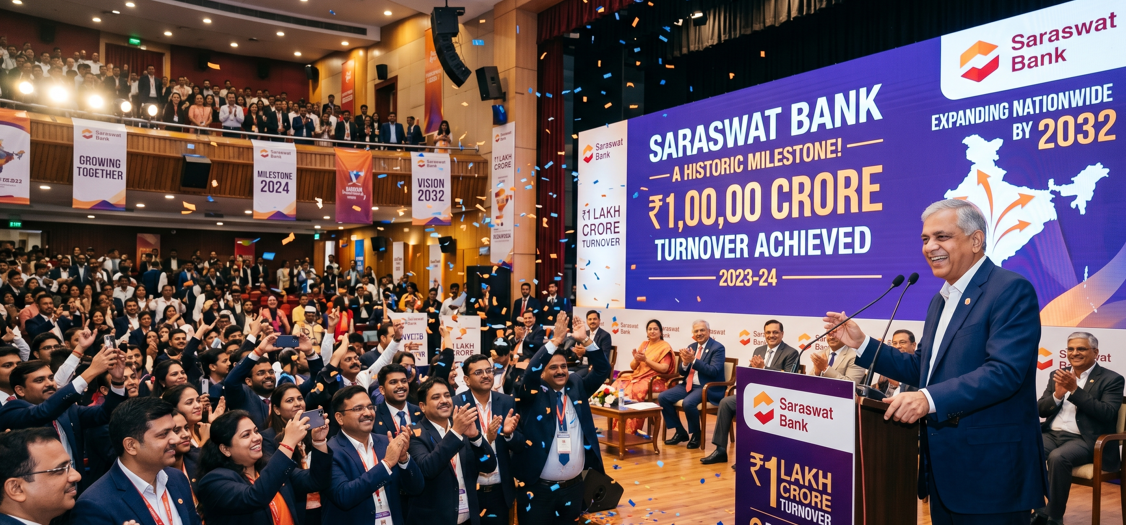
- Saraswat Cooperative Bank just reached a major point they hit a turnover of Rs 1 lakh crore.
- This isn’t just a big number; it shows how much people trust them, how much effort they’ve put in, and their more than a hundred years of steady service to India’s middle class.
- The Chairman, Gautam Thakur, recently gave an interview where he laid out a plan that’s both ambitious and true to the cooperative idea.
When we talk about Indian banking, it usually feels like it’s just about the big corporate banks and huge government-run banks. But if you look a little closer, something interesting is happening quietly in cooperative banking. Saraswat Cooperative Bank just reached a major point they hit a turnover of Rs 1 lakh crore. This isn’t just a big number; it shows how much people trust them, how much effort they’ve put in, and their more than a hundred years of steady service to India’s middle class.
The Chairman, Gautam Thakur, recently gave an interview where he laid out a plan that’s both ambitious and true to the cooperative idea. He wants to expand the bank across India over the next six years. He also aims for Saraswat Bank to become a mid-sized bank in the country in about ten years.
To really understand why this achievement is special, you have to look at the bank’s history. Saraswat Bank is 107 years old. It started as a small credit society in Mumbai, helping middle-class families who needed financial support. For a long time, it didn’t cover a lot of ground, but its foundation was strong. Eventually, the bank spread across Maharashtra and now operates in 11 states and one union territory. The real growth really picked up in the last 25 years. The numbers are pretty crazy. Just twenty years ago, Saraswat Bank’s turnover was around Rs 4,000 crore. Today, it has jumped to Rs 1 lakh crore that’s 25 times bigger in two decades. Last year alone, they grew by 16%. Mr. Thakur is confident that Saraswat will double that number in the next six years and open branches in every state in India.
Thakur says it’s because of their strong internal processes and really fast loan approvals. In today’s world, speed is important, especially for businesses borrowing money. Also, the bank’s cost of getting funds is much better than most non-banking finance companies (NBFCs), so they can offer loans with very good interest rates. For people who deposit money, Saraswat’s fixed deposit rates are usually better than government banks. It’s a situation where everyone wins, which keeps customers very loyal. Saraswat’s past also has some cool stories. Not many people know that big companies like Infosys and Vijay Sales got their very first loans from Saraswat Bank. The bank has always been good at spotting future successful businesses, supporting them early on when others didn’t see their potential.
Being a cooperative bank gives Saraswat a different feel. Thakur clearly explains the difference between corporate boardrooms and the cooperative model, where the main values are working together and democracy. Leaders aren’t just picked; they are voted in by the people. It’s a democratic system, but Thakur says choosing a capable board is key for the bank to grow and stay strong. Saraswat shows that you can have democratic leadership along with excellent operations.
This year is a big one for cooperative organizations. Both Saraswat Bank and Amul (the famous dairy company) hit the Rs 1 lakh crore mark at around the same time. The Ministry of Cooperation celebrated this, and Union Minister Amit Shah even recognized their achievement. Thakur also gives credit to the RBI for creating rules that allow for such huge growth. Looking back, Saraswat Bank’s journey from a small credit society in Mumbai to a major banking player is truly inspiring. They are getting ready for a nationwide expansion, carrying the hopes and trust of millions. Their story proves that strong values and reliable leadership can help cooperative banks not just survive, but become leaders in India’s financial world.