

- Artificial intelligence is not something that we will see in the future.
- It is a part of how banks and financial companies do their work.
- Artificial intelligence is really a part of the basics of how these companies operate.
- We’re talking everything from split-second trading decisions to customer support that seems to read your mind.
- But underneath all that shiny efficiency, there’s a big, lurking risk.
Artificial intelligence is not something that we will see in the future. It is here now. It is a part of how banks and financial companies do their work. Artificial intelligence is really a part of the basics of how these companies operate. We’re talking everything from split-second trading decisions to customer support that seems to read your mind. But underneath all that shiny efficiency, there’s a big, lurking risk. These institutions handle your most private data—mess up the math or let a hacker slip through, and the fallout can be huge.
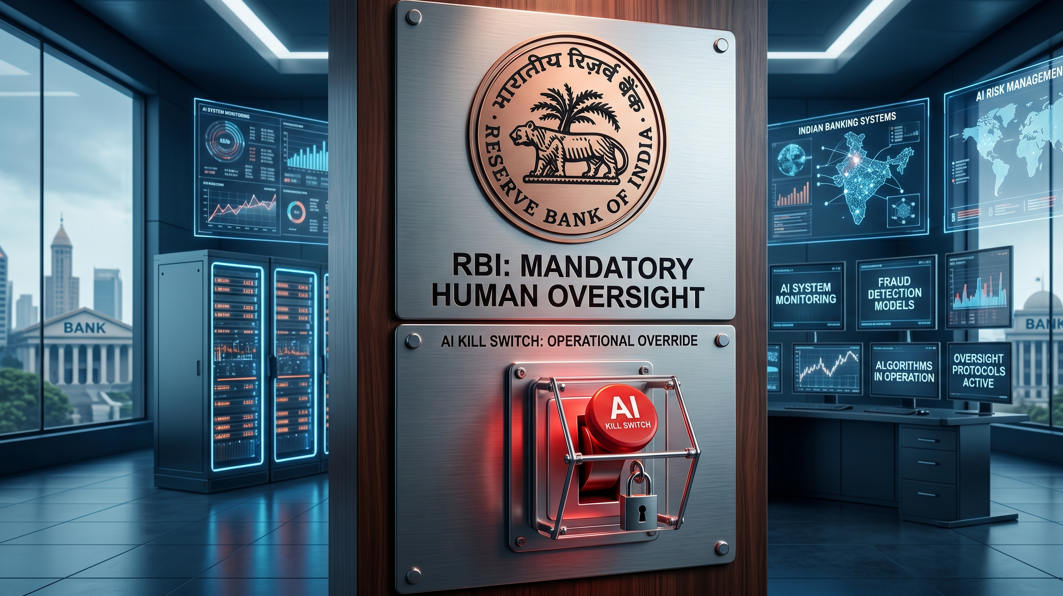
The Reserve Bank of India (RBI) isn’t taking any chances. Sensing this risky dance between using AI and keeping things secure, they recently put out a set of tough draft guidelines. Top of that list: every bank using AI has to set up a “kill switch” and make sure there’s always a human keeping an eye on things.
What’s with the Kill Switch?
“Kill switch” sounds like something from a thriller movie, but in banking, it’s just plain common sense. The RBI wants every bank that uses AI to have a way to just pull the plug on any system instantly. If something starts acting weird—bad output, an error, or if hackers get clever—a human can jump in and shut the thing down fast. No waiting, no red tape. Just flip the switch.
Humans Still Matter: Fighting Automation Bias
Sure, AI can zip through mountains of data in a blink, but it doesn’t have common sense, context, or ethics. The RBI actually gets this and says, look, AI should help humans make better choices, not make all the choices for them. So part of the draft rules is simple: humans need to double-check whatever AI spits out.
This actually targets something called “automation bias.” People tend to trust the computer blindly, even when it’s off-base. The RBI is clear—whether it’s approving a loan, flagging a transaction, or crunching investment numbers, a person must check the work. No letting the machine drive the bus while everyone else naps in the back.
Risk Tiers: Not All AI Is Equal
Let’s be honest, there’s a huge difference between an Excel macro and a fancy generative AI doling out business loans. The RBI’s rules break AI models into different risk levels, based on what could go wrong. If a system is high-risk, it faces stricter scrutiny—it needs sign-off from the bank’s Risk Management Committee before it can go live.
If a model crosses into the red zone, banks have to act, pronto. That might mean tightening controls, limiting how they use it, or pulling the plug. Oh, and every single model gets a review at least once a year, no slacking allowed.
Accountability Starts at the Top
For the first time, RBI’s putting responsibility for AI right on the board of directors’ desks. Every bank has to set up a strong, board-approved framework that keeps tabs on all AI models—built in-house, bought from a vendor, or whatever.
Outsourcing isn’t an escape hatch, either. Just because a third party built the model doesn’t mean the bank can blame someone else if things go sideways. RBI wants serious, no-nonsense due diligence before buying any tech, and banks are supposed to keep their vendor relationships diverse so a single weak link doesn’t bring everyone down.
Your Right to a Human
One thing that might surprise you: RBI’s going to bat for customers, too. With clever chatbots out there, sometimes you can’t even tell if you’re talking to a machine. RBI says banks have to tell you up front if it’s an AI behind the chat window.
Even better, they have to give you a way to talk to a real person at any point. No more getting stuck arguing with a bot that just doesn’t get your problem. If things get complicated or frustrating, you’re guaranteed a real human on the other end.
Looking Ahead
The RBI’s asking for feedback on these draft rules until July 24. But honestly, these new guidelines could push the Indian financial industry onto the world stage—all while keeping security and trust front and center.
By demanding a kill switch, mandating real human oversight, and holding the top bosses directly accountable for how AI works in their banks, the RBI is making one thing clear. India’s banking system will use AI to get faster and smarter, but never at the expense of your safety or trust. The future’s here, and RBI’s making sure it stays on our side.