

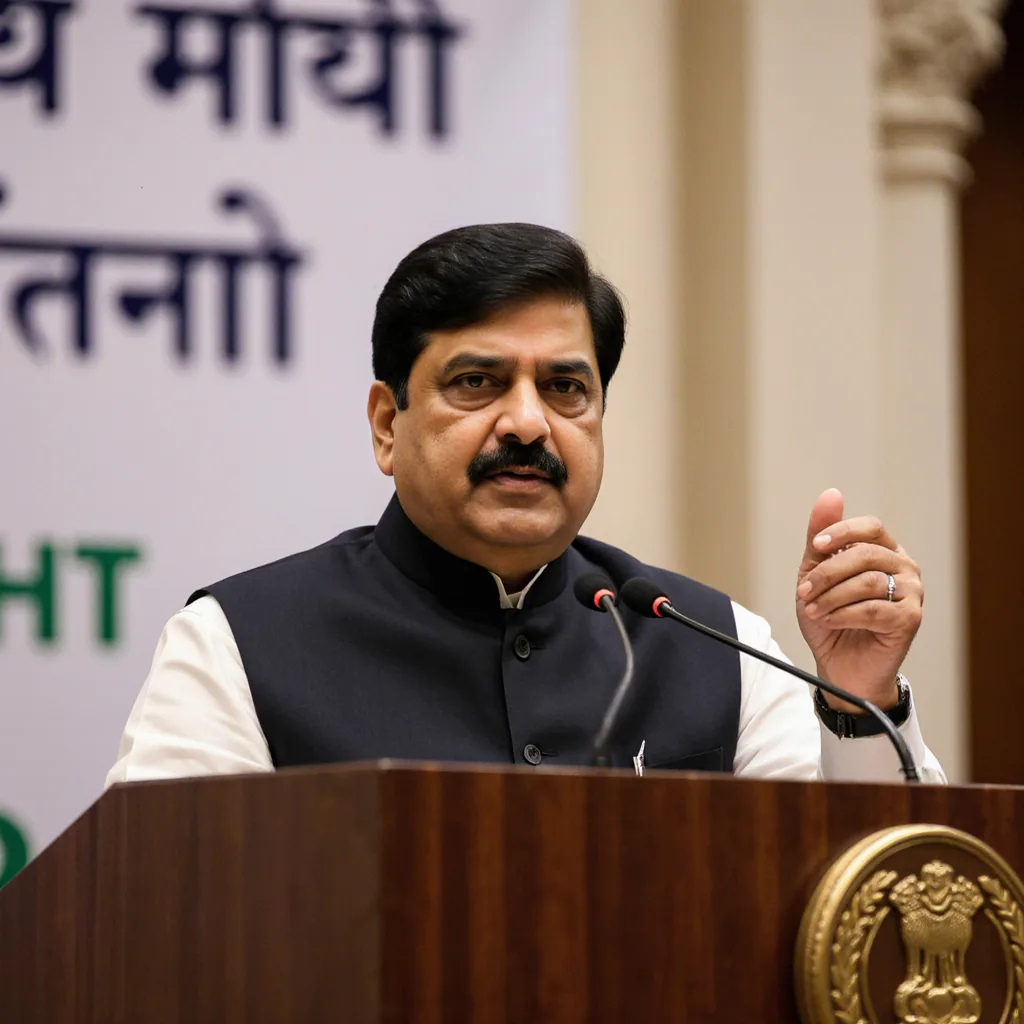
- Union Minister Pankaj Chaudhary announced that NABARD and NCDC collectively invested over Rs 42,000 crore into cooperative banks in FY 2024-25, demonstrating a strong commitment to bolstering India’s cooperative banking system.
- Among NABARD’s funding, Madhya Pradesh was the largest beneficiary with Rs 4,430 crore, followed by Odisha with Rs 4,113 crore, and Karnataka with Rs 3,655.52 crore.
- Tamil Nadu received Rs 2,946.49 crore, while Rajasthan was allocated Rs 2,760.75 crore.
- Other substantial allocations included Andhra Pradesh with Rs 2,716.55 crore, Maharashtra with Rs 2,696.26 crore, and Gujarat with Rs 1,691.31 crore.
- Smaller states received smaller amounts, with Sikkim receiving Rs 3.10 crore, Goa Rs 23.97 crore, Nagaland Rs 33 crore, Mizoram Rs 12.60 crore, and Manipur Rs 7.81 crore.
Union Minister Pankaj Chaudhary announced that NABARD and NCDC collectively invested over Rs 42,000 crore into cooperative banks in FY 2024-25, demonstrating a strong commitment to bolstering India’s cooperative banking system.
Among NABARD’s funding, Madhya Pradesh was the largest beneficiary with Rs 4,430 crore, followed by Odisha with Rs 4,113 crore, and Karnataka with Rs 3,655.52 crore.
Tamil Nadu received Rs 2,946.49 crore, while Rajasthan was allocated Rs 2,760.75 crore. Other substantial allocations included Andhra Pradesh with Rs 2,716.55 crore, Maharashtra with Rs 2,696.26 crore, and Gujarat with Rs 1,691.31 crore. Smaller states received smaller amounts, with Sikkim receiving Rs 3.10 crore, Goa Rs 23.97 crore, Nagaland Rs 33 crore, Mizoram Rs 12.60 crore, and Manipur Rs 7.81 crore.
In addition to NABARD, NCDC also provided significant financial assistance during the same fiscal year. Andhra Pradesh was the top recipient with Rs 3,730 crore, while Telangana received Rs 2,000 crore. Madhya Pradesh received Rs 291 crore, and Rajasthan Rs 77 crore.
Notably, Bihar, which had been a major recipient in prior years, received no funding from NCDC in FY 2024-25. These investments emphasize the government’s strategic focus on supporting cooperative banks as essential channels for credit and development in rural India.
The Minister also pointed out that nearly all cooperative banks nationwide are now utilizing the Core Banking Solution (CBS) platform, except for one Urban Cooperative Bank in West Bengal.
This achievement signifies a significant advance in digital transformation for the cooperative sector, promoting increased openness, efficiency, and connectivity. The CBS implementation is considered a key improvement to enhance customer service, strengthen oversight, and reduce operational risks within cooperative institutions.
Cooperative banks in India are registered under State Cooperative Societies Acts or the Multi-State Cooperative Societies Act, 2002. They are regulated by the Reserve Bank of India once they engage in banking, licensed under the Banking Regulation Act, 1949. This dual regulatory system ensures both cooperative values and financial stability are maintained.
As of March 31, 2025, India’s cooperative banking system comprised 34 State Cooperative Banks, 352 District Central Cooperative Banks, and 1,457 Urban Cooperative Banks. These numbers illustrate the broad reach of the cooperative banking structure, which is vital in providing credit to farmers, small businesses, and rural families.
With the investment of over Rs 42,000 crore in FY 2024-25 and the almost complete digital integration of cooperative banks, the sector is positioned for greater stability and an increased contribution to rural development in the future.